August 5, 2025
Designing the Future: How AI is Transforming Hardware Development
Type
Deep DivesContributors
Vikram Venkat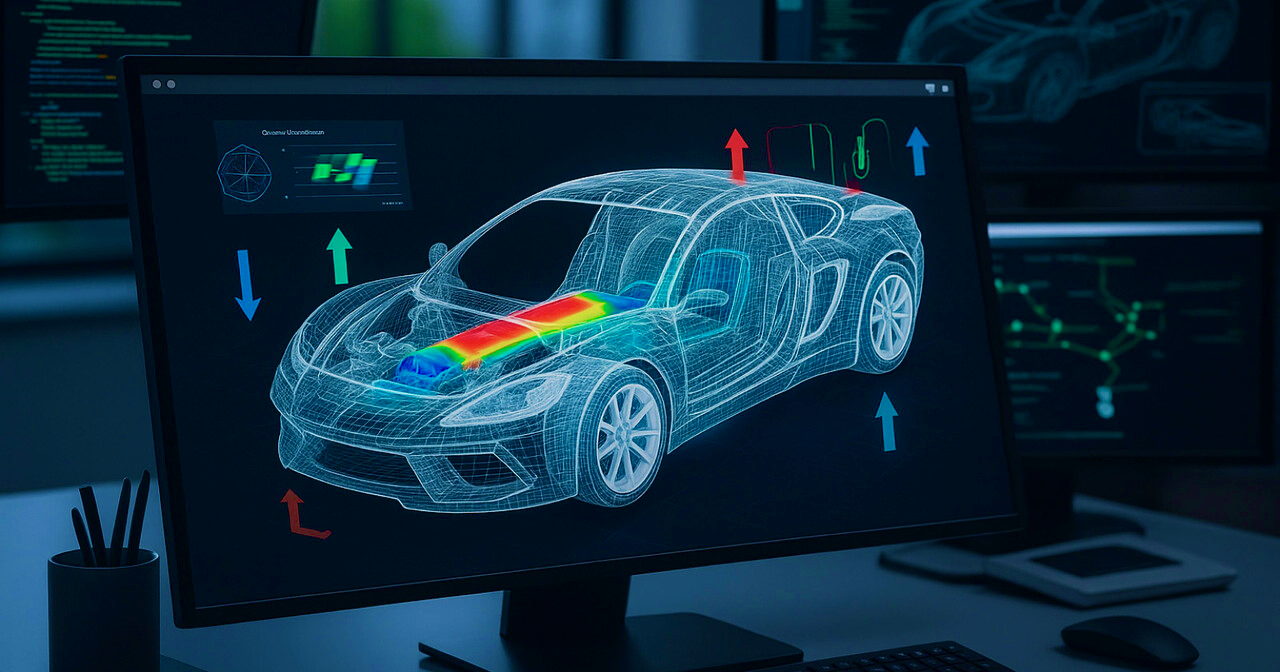
In Part 1, we laid out the various steps within the hardware development life cycle and some of the technical breakthroughs that have the potential to transform this workflow. Now, we delve deeper into how a new wave of software platforms is leveraging these breakthroughs to create solutions across the entire hardware development life cycle.
The Rewired Hardware Development Lifecycle
Design: Generative AI has the potential to radically transform this stage of the workflow and disrupt the incumbent 2D and 3D modeling platforms such as Autodesk, PTC, Dassault, and others. Several different AI-enabled approaches that aim to simplify the design process exist, including:
- Natural language text to 2D drawing or 3D model generation,
- 2D drawing to 3D model (or vice versa),
- Image to 2D or 3D model,
- Co-pilots or assistants that integrate with existing CAD and EDA tools and provide guidance to the user, or automate some of the workflows within the design process, and
- Collaboration platforms that streamline sharing, storage, and editing for design files, reviews, and project management.
These solutions can significantly reduce the time and effort required to create new engineering designs, freeing up engineers’ time while also ensuring higher accuracy. They also provide more guidance to users, leveraging learnings from past work.
Simulation: The amalgamation of AI, ML, and fundamentals of physics can help significantly improve the simulation step of the workflow, providing a step change in functionality over traditional CAE and EDA simulation platforms. Further, platforms can now integrate and leverage large volumes of real-world data from experiments or field usage, enabling more accurate simulations that go beyond theoretical knowledge. Solutions in this space can be segmented as:
- Generalist solutions that aim to be holistic physics models or solvers across different use cases and industries (OpenAI for the physical engineering world), and
- Vertical-specific solutions purpose-built for individual industries (e.g., aerospace)
AI-enabled solutions can deliver significantly higher computational efficiency than traditional solutions, reducing the time and cost of running tests. Not only does this free up engineer time, but more importantly, it allows engineers to test a wider variety of solutions in a short period of time (virtual rapid prototyping), significantly reducing time-to-market while also enhancing accuracy.
Pre-manufacturing: Generative AI is well-suited to support the manual tasks involved in creating manufacturing-ready documentation, including the various exploded views, diagrams, assembly / stackup instructions, and manufacturing instructions. These platforms take as input various models, diagrams, and schematics and generate documentation that includes detailed instructions and technical specifications, which can then be validated or modified by the design teams before being handed over to the manufacturing teams.
While earlier waves of SaaS platforms have enabled efficient vendor management, inventory tracking, and the management of manufacturing processes, AI has the ability to supercharge these platforms with intelligent workflows and automation. This includes:
- Identifying sources for and optimizing the procurement of materials and parts,
- Automating stakeholder communications, follow-ups, and project tracking, and
- Generating vendor onboarding documentation and invoicing.
These solutions eliminate some of the most tedious work that all stakeholders (across engineering, finance, and operations) must undertake, enabling them to focus on more critical tasks. These solutions also provide significant boosts in efficiency and accuracy. Finally, workflow automation platforms that enable better collaboration and information flow between design and manufacturing teams can also simplify and speed up the process, ensuring faster prototyping and time-to-market.
Overcoming Inertia: Barriers to Adoption
While several new solutions are emerging across the hardware development life cycle, they also need to overcome several challenges before they can truly deliver on their potential.
First, while there are large amounts of data that can be used to train or fine-tune models across the design, simulation, and pre-manufacturing available publicly, much of the best data lies locked within and is proprietary to the largest engineering companies. Models are only as good as their training data, and the proprietary nature of many of the potential input datasets could limit companies in this space from raising the bar beyond the best in the industry. Companies building in this space would need to think creatively to obtain as much real-world usage data as possible to help train their models. One potential approach could be to partner with universities or take a prosumer approach that helps generate significant amounts of data from users with less stringent privacy requirements.
Second, incumbents in this space have significant advantages from the embedded nature of their solutions. The biggest players in this space are typically platforms that offer solutions or products across the entire hardware development life cycle and have a vast array of integrations with other systems, including ERPs, PLMs, PDMs, collaboration tools, and other relevant software used across various industries. Incumbent solutions typically also have marketplaces of apps that are built on top of or integrated with their solutions, creating a stronger lock-in. New entrants in this space would need to overcome the significant switching costs required to move away from incumbents. While this poses a significant short-term challenge, over time, new entrants should evolve to become platforms themselves.
Third, incumbents have the advantage of trust and familiarity. Generations of engineers have used these legacy platforms during their education as well as at work and have a strong sense of comfort with these systems. New entrants should prioritize an extremely easy-to-use and intuitive UX that enables new users to quickly adopt their solution without extensive training. The best AI tools for the software development life cycle leverage natural language and a highly elegant UI that prioritizes simplicity – a playbook that early leaders disrupting the hardware development lifecycle can leverage as well.
Gathering Momentum: The Way Forward
On the other hand, new entrants aren’t weighed down by legacy architectures and can more rapidly build solutions that bring significant value to the engineers of today and tomorrow. Building a software platform on an AI-native and cloud-native architecture would enable true flexibility and significantly better resource efficiency – many incumbent solutions are held back by their architecture and cannot truly leverage advances in compute efficiency without significantly re-architecting their entire solution. AI-ready architectures can also enable truly embedding advanced intelligence capabilities across the entire workflow (as opposed to bolt-on solutions that solve for some aspects of the workflow), offering faster time-to-output, advanced insights, and ease of use.
Furthermore, while there are significant initial barriers to entry, AI solutions can benefit from a data flywheel, learning from customers’ historical data (while maintaining strict privacy and confidentiality, which is crucial in these verticals) as well as more specific data from end-user interactions while using the tool. This would enable accelerated value delivery and rapid customization to meet engineers’ needs and preferences, providing a more personalized offering than generalist incumbent platforms can deliver. Consequently, challenger solutions can win the trust of engineers and become an integral part of their workflow, thereby embedding themselves and ensuring high levels of stickiness. This learning and trust would also provide a crucial foothold to expand into adjacent parts of the workflow, enabling challengers to become true platforms.
AI-native companies that emerge as winners in this space are likely to become some of the biggest companies in the world, powering the design and manufacture of aircraft, automobiles, electronic appliances, semiconductors, and much more. The market opportunity is massive – Cambashi’s estimates put the total addressable market (TAM) for design applications at $17 Billion in FY23, and a total market of 10M engineers and drafters. According to the Bureau of Labor Statistics (BLS), there are over 640K active drafters, engineering technicians, and mapping technicians in the United States, as well as 1.7M engineers working across various physical engineering disciplines, with the majority being in mechanical, civil, and electrical engineering. This is a growing market, with the BLS estimating that 195,000 such openings are added every year; other estimates similarly project a double-digit percentage CAGR for the engineering design software market.
In addition, solutions in this market have the potential to significantly expand the market size in several ways. First, they can expand beyond software revenue and eat into people costs by offering service-as-a-software. Given the vast engineering shortage (estimates from BCG found that nearly 1 in 3 engineering roles are unfilled) and the high cost of skilled engineers, this can be a crucial and massive unlock. Second, like the disruption in the software world (through Cursor, Windsurf, Vercel, and others), AI-enabled hardware engineering platforms can help democratize access to engineering knowledge and provide leverage to semi-skilled users building in this world.
We at Cota Capital believe there is significant potential for new solutions that can bring cutting-edge innovation to optimize and enhance the entire hardware development life cycle, bringing the speed and agility of software development to the complex and rigorous world of hardware development. If you are building in this space, we’d love to talk to you.
Share Story